A knowledge graph database stores information as a network of connected entities rather than rows and columns. Instead of asking “what data do we have?”, it asks “how does this data relate to everything else?” That shift in thinking is what makes it useful in situations where traditional databases start to struggle.
The Problem with Traditional Databases
Relational databases are great at storing structured data. A table of customers, a table of orders, a table of products, etc. Clean, predictable, and fast to query. But the moment you need to understand complex relationships across many different types of data, things get messy. You end up writing complicated queries, joining dozens of tables, and still not necessarily getting a clear picture of how everything connects.
Knowledge graph databases were built specifically for that problem.
How They Actually Store Data
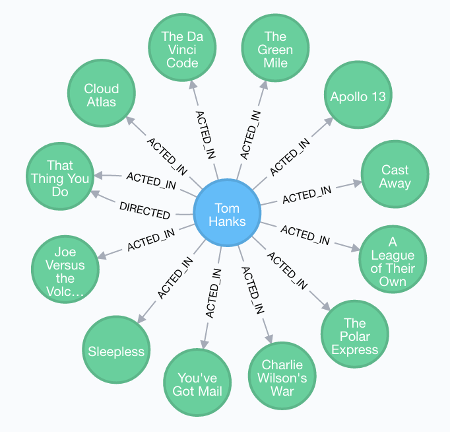
Everything in a knowledge graph is represented as either a node or an edge. Nodes are entities. For example a person, a company, a product, a location, etc. Edges are the relationships between them. So instead of storing “Customer ID 482 placed Order ID 9021”, you store “Sarah placed an order for hiking boots on Tuesday”. The relationship is part of the data itself.
This structure makes it easy to ask questions that would be painful in a relational database. Things like “show me everyone who bought hiking boots, works in the outdoor industry, and lives within 50 miles of a national park”. Following those connections is fast, because the relationships are already mapped.
Where Knowledge Graphs Show Up
If you’ve only recently discovered the concept of knowledge graph databases, you may be surprised to learn that they’re more common than you thought:
- Search engines: Google’s Knowledge Graph is what powers those info panels you see when you search for a person or place
- Recommendation systems: Netflix and Spotify use graph-based data to understand relationships between users, content, and behavior
- Fraud detection: Banks use them to trace connections between accounts, transactions, and known bad actors
- Healthcare: Mapping relationships between symptoms, diagnoses, drugs, and patient histories
- Enterprise data management: Helping large organizations understand how their internal data assets relate to each other
How This Connects to AI
Knowledge graph databases pair well with AI because they give models structured context. A language model on its own might know a lot, but it doesn’t automatically know how your company’s products, customers, and internal processes relate to each other. Feed it a knowledge graph, and suddenly it has a map to work from.
This is part of why knowledge graphs have been getting more attention lately. As companies build AI-powered tools on top of their own data, they need a way to represent that data that goes beyond flat tables. Graphs fill that gap.
Popular Knowledge Graph Databases
If you’re looking to explore knowledge base databases, a few names come up most often:
- Neo4j: The most widely used graph database, with a large community and good documentation for beginners.
- Amazon Neptune: AWS’s managed graph database. Good if you’re already in the Amazon ecosystem.
- Dgraph: Open source and built for high performance at scale.
- TigerGraph: Often used in enterprise settings for large, complex datasets.
Is It Hard to Learn?
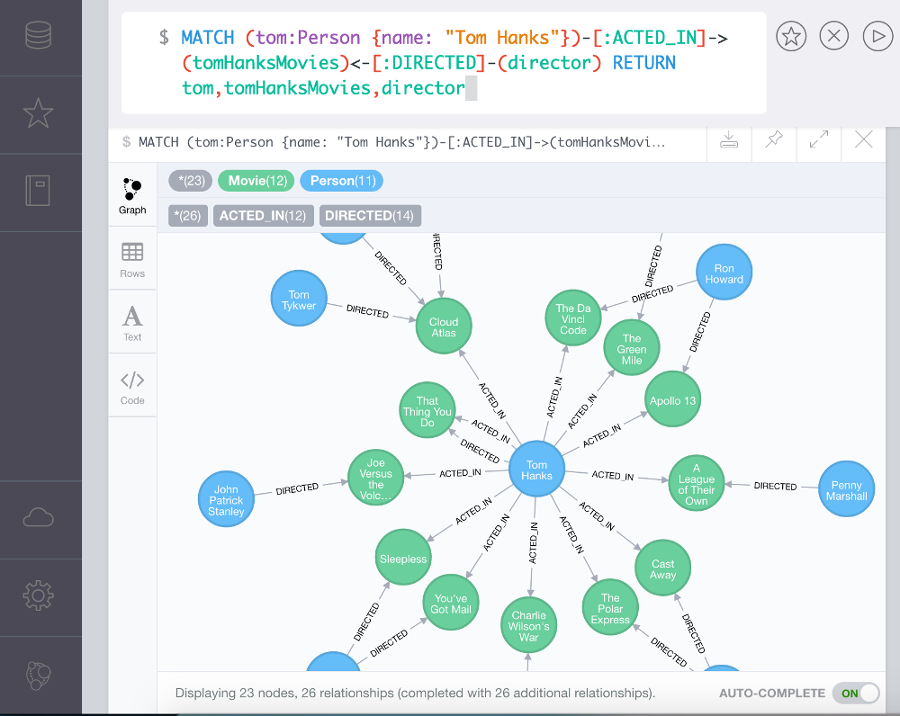
Depends on your background. If you’ve worked with SQL before, the mental shift takes some getting used to. You query graph databases with languages like Cypher (used by Neo4j) or SPARQL, which look and feel different from SQL. The concepts aren’t deeply complicated, but they do require reframing how you think about data.
Here’s an example of querying a Neo4j database with Cypher:
Most graph database platforms have solid beginner tutorials, and Neo4j in particular has a free sandbox environment where you can start running queries without installing anything.
When It Makes Sense to Use One
A knowledge graph database probably isn’t the right tool if your data is simple and structured, and your queries are straightforward. Relational databases handle that well and are easier to maintain.
But if your data is highly interconnected, if understanding relationships between entities is central to what you’re building, or if your SQL queries are getting painfully complex trying to stitch things together, a graph database is worth a serious look. The more your problem is fundamentally about connections, the more it fits.